How AI Demand Forecasting Improves Production Planning in 2026
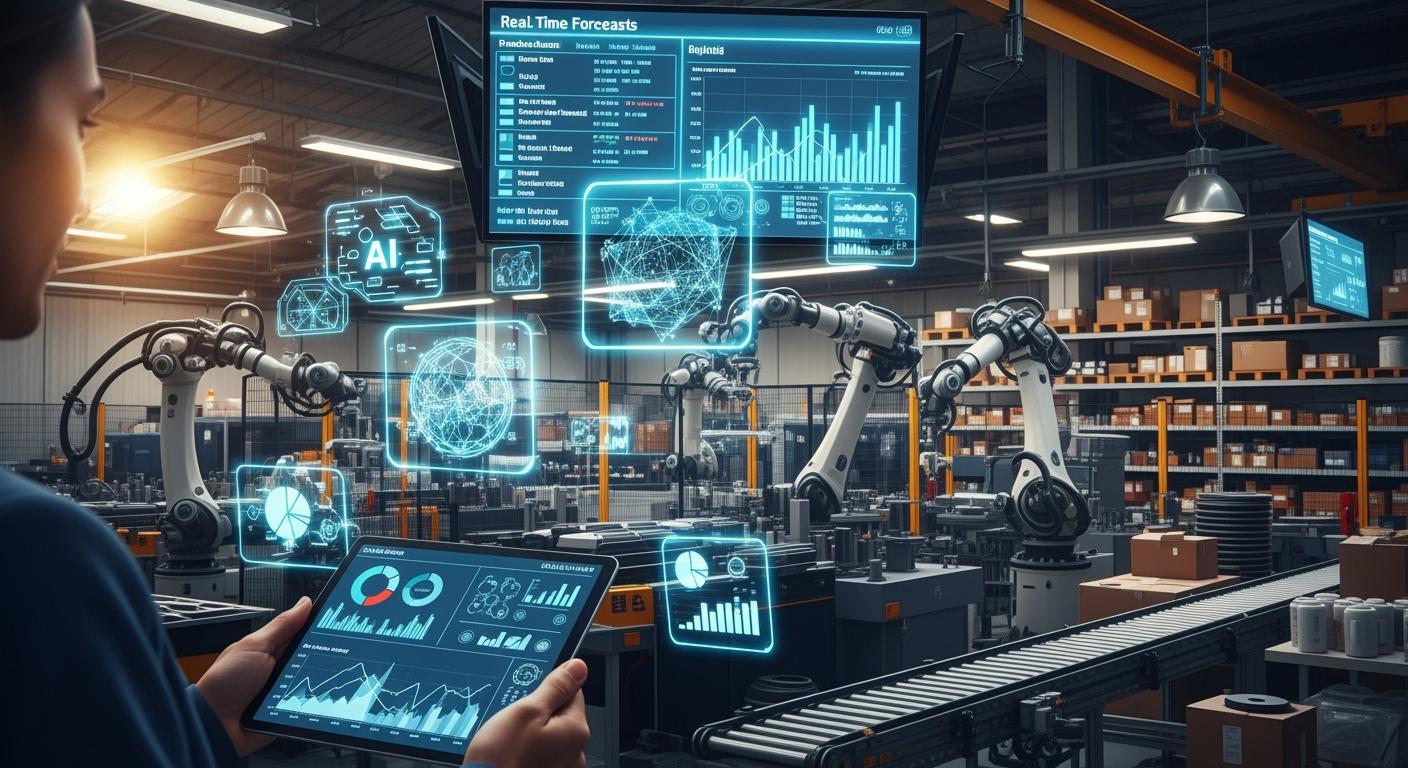
You see a major shift in production planning as ai demand forecasting takes center stage in 2026. Manufacturers now use ai to boost accuracy, cut costs, and gain agility. Recent reports show 66% of manufacturers rely on ai agents for procurement, up from just 27% last year. Ai-powered software captures subtle demand patterns and adapts in real time, preventing overproduction and improving customer satisfaction.
| Method | Accuracy Improvement |
|---|---|
| Traditional Methods | Baseline |
| AI Demand Forecasting | 20% or more |
Ai solutions deliver resilience by reducing disruptions and optimizing inventory, making demand forecasting a must-have for your business.
Challenges for Manufacturers in Demand Forecasting
Manual Forecasting Limitations
You face many obstacles when you rely on manual forecasting. Human-driven methods struggle to keep up with fast-changing markets. You often miss sudden shifts in demand caused by trends or external disruptions. Manual forecasting cannot scale as your business grows. It requires constant attention and oversight.
| Limitation | Description |
|---|---|
| Unprecedented external disruptions | Traditional methods fail to account for sudden changes in consumer demand. |
| Detecting shifts in consumer demand | Manual forecasting cannot quickly identify changes from trends or promotions. |
| Anticipating retailer orders | These methods struggle to predict orders after initial stock fills. |
Manual forecasting limits your ability to respond quickly. You may spend hours updating spreadsheets, but you still miss important signals. AI-driven demand forecasting solves these problems by automating data analysis and adapting to new information.
Impact of Inaccurate Predictions
Inaccurate demand forecasting affects your production planning and costs. You risk overstocking or running out of products. This leads to wasted resources and unhappy customers. Studies show that forecast errors can cause schedule instability, higher inventory costs, and production delays.
| Study | Findings |
|---|---|
| Kahn (2003) | Errors impact supply chain management. |
| Ho and Ireland (1998) | Errors affect production planning and cause nervousness. |
| Lee and Adam (1986) | Errors increase inventory costs and shortages. |
| Xie et al. (2004) | Errors cause schedule instability and lower service levels. |
- Inaccurate demand signals lead to excess safety stock and markdowns.
- These issues directly affect customer experience and net revenue.
- Higher logistics costs and increased working capital requirements hinder competitiveness.
You need reliable forecasting to avoid these problems. AI helps you improve accuracy and reduce risks.
Need for Accurate Demand Insights
You must have accurate demand insights to plan production and manage resources. Without them, you face higher inventory costs and lower customer satisfaction. Demand volatility makes workforce planning difficult. Economic uncertainty in 2026 increases these challenges for manufacturers.
| Consequence | Description |
|---|---|
| Increased Inventory Costs | Inaccurate demand insights lead to higher costs from overstocking or stockouts. |
| Reduced Customer Satisfaction | Lack of accurate forecasts results in stockouts and poor delivery. |
| Challenges in Workforce Planning | Demand volatility complicates labor needs and planning. |
- Demand volatility can lead to unpredictable changes in labor requirements.
- You must monitor and adjust forecasts continuously.
- AI demand forecasting gives you real-time insights and helps you stay agile.
Tip: AI-powered demand forecasting allows you to scale your operations and adapt quickly to market changes. You can forecast demand for thousands of products across many regions, updating predictions every few hours.
How AI Demand Forecasting Works
Data Integration and Sources
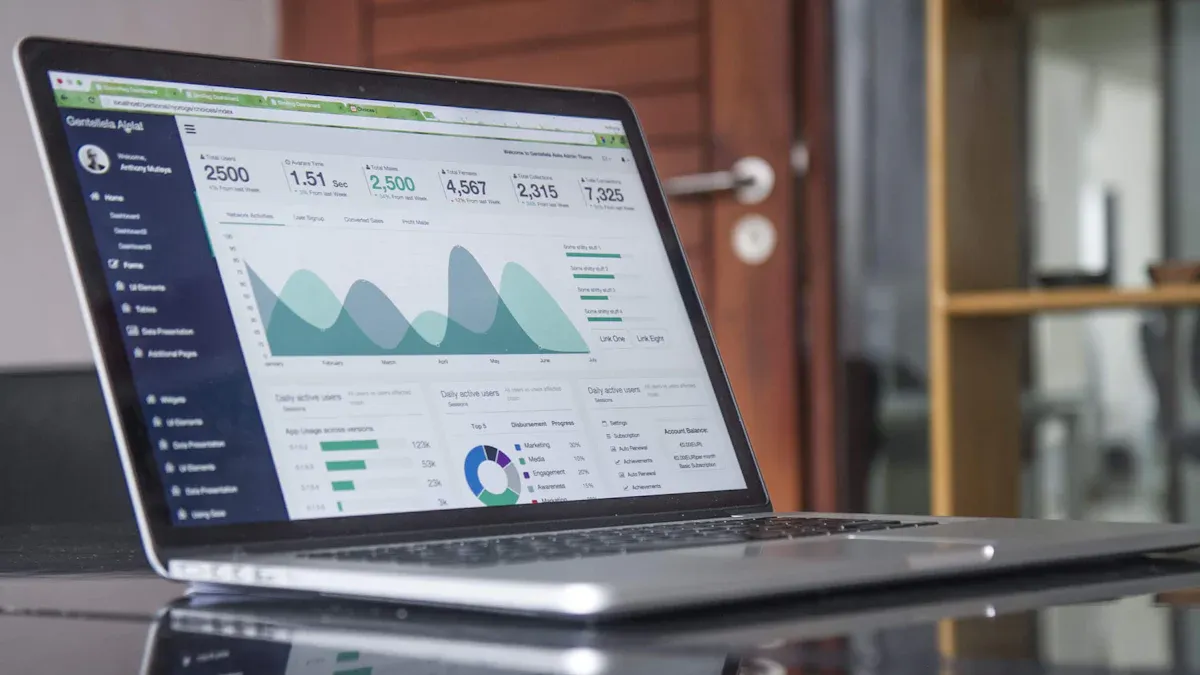
You need many types of data to make demand forecasting accurate. AI collects both structured data, like sales and historical demand, and unstructured data, such as social media, web trends, weather, and news. AI models scan social media for trending products, analyze browsing behavior, and factor in local weather. These systems adjust store-level forecasts for demand spikes and account for production constraints and transportation lead times. Autonomous agents monitor data streams and flag at-risk deals. They recommend production adjustments when needed. By combining real-time data with historical records, you get a clear view of demand patterns.
- Structured data: sales, historical demand
- Unstructured data: social media, web trends, weather, news
- Real-time data: order flow, supply chain disruptions
AI-driven demand forecasting finds complex patterns in large datasets. This leads to better decisions and cost savings.
Predictive Modeling and Real-Time Analytics
AI uses predictive modeling and analytics to improve forecasting. Real-time demand sensing helps you detect shifts quickly. You can adjust production and inventory before problems grow. Pattern recognition lets AI spot nonlinear trends and anomalies. Multi-variable forecasting includes many factors, both inside and outside your business. Machine learning demand forecasting solutions learn from new data and improve over time. These systems can reach accuracy rates of 80-95%. This is much higher than traditional forecasting methods.
- Detect demand shifts fast
- Spot trends and anomalies
- Learn and improve with new data
Predictive analytics gives you the power to act before issues affect your business.
Scenario Simulation for Manufacturers
AI lets you run scenario simulations for demand forecasting. Generative forecast modeling creates many possible demand scenarios. You can see how policy changes, consumer behavior, or supplier disruptions might affect your business. This helps you plan ahead and avoid bottlenecks. You stay resilient during market uncertainty. Scenario simulation gives you confidence to make smart decisions.
Tip: Use scenario simulation to test your response to sudden demand changes. You will be ready for anything the market brings.
AI-Powered Demand Forecasting Benefits
Production Scheduling Optimization
You can transform your production scheduling with ai-powered demand forecasting. This technology lets you adjust your manufacturing operations in real time. You no longer need to rely on rigid plans that cannot adapt to sudden changes. Ai-powered systems analyze huge streams of data from sales, market trends, and supply chain events. You get accurate predictions that help you match production with actual demand.
Factories using ai demand forecasting see less downtime and better machine utilization. You can shift schedules quickly when you spot a change in demand. This flexibility means you avoid overproduction and reduce waste. Many manufacturers report that ai-powered demand forecasting improves forecast accuracy by 20–50% within months. You also see faster responses to market changes, which boosts your competitive edge.
Tip: Use demand planning software to automate your scheduling. You will save time and reduce errors in your production planning.
Inventory and Warehouse Efficiency
You can achieve high levels of inventory planning accuracy with ai-powered demand forecasting. Ai reviews both historical and real-time data to predict demand spikes. This helps you keep the right amount of stock on hand. You avoid costly overstocks and stockouts. Warehouses using ai can reach up to 99% inventory accuracy, compared to 90-95% with traditional methods.
Here are some ways ai improves inventory and warehouse efficiency:
- Aligns inventory levels with market demand for better supply chain optimization strategy.
- Integrates data from consumer behavior, web trends, and sales for precise forecasting.
- Uses continuous learning to adapt to changing market conditions.
- Reduces inventory holding costs by up to 20%.
- Cuts stockouts and overstocking by up to 15%.
You also see better cash flow management because you do not tie up money in excess inventory. Ai-powered software helps you optimize procurement schedules and storage space. This leads to lower costs and higher customer satisfaction.
| Metric Type | Improvement Percentage |
|---|---|
| Inventory Optimization Gains | 20-30% reduction in safety stock requirements |
| 15-25% decrease in carrying costs | |
| 40% reduction in stockout incidents |
Note: Enterprise supply chain planning solutions powered by ai can help you manage thousands of products across many locations.
Responding to Market Disruptions
You can stay resilient during market disruptions with ai-powered demand forecasting. Ai uses real-time data and scenario simulations to help you plan for raw material shortages or sudden demand surges. You can test different scenarios and see how your business will respond. This makes your planning more agile and reliable.
Manufacturers use ai to adapt quickly to changes in demand and supply. Ai models learn from new data every day. They recalibrate predictions faster than traditional forecasting methods. You can optimize production schedules and align them with real market needs. This helps you avoid delays and keep customers happy.
Some common use cases include:
- Demand forecasting for new product launches, where ai predicts both baseline demand forecasting and launch demand profiles.
- Waste reduction, especially in industries with perishable goods.
- Transportation and logistics optimization, with ai adjusting delivery routes and shipping schedules.
- Improved ROI metrics, such as a 30-40% reduction in forecast variance and a 25% improvement in demand planning precision.
| Metric Type | Improvement Percentage |
|---|---|
| Forecast Accuracy Improvements | 30-40% reduction in forecast variance |
| 25% improvement in demand planning precision | |
| 50% faster identification of demand trend changes | |
| Operational Efficiency Metrics | 60% reduction in time spent on manual forecasting tasks |
| 35% faster quote-to-order cycle times | |
| 45% improvement in on-time delivery rates |
Callout: SaaS supply chain optimization software gives you the tools to respond to disruptions and keep your business running smoothly.
You can use ai-powered demand forecasting to support new product launches, reduce waste, and improve your overall supply chain performance. This technology helps you make smarter decisions and stay ahead in a fast-changing market.
Measurable Outcomes and Best Practices
Forecast Accuracy and Cost Reduction
You can see clear results when you use ai demand forecasting in your production planning. Many manufacturers report fewer stockouts and leaner inventory management. Your supply chain becomes more responsive, which shows a strong return on investment. When you use ai, you often see a 20–50% reduction in forecast errors. Warehousing costs drop by 5–10%. Planning cycles become up to 40% faster. You also reduce overstocking and stockouts, which helps you manage inventory better. Many companies notice lower operational costs and more efficient supply chains. You can minimize excess inventory and optimize procurement schedules with the right strategy.
- 20–50% reduction in forecast errors
- 5–10% lower warehousing costs
- Up to 40% faster planning cycles
Agility and Decision-Making
You gain more agility in your operations with ai demand forecasting. The software analyzes large amounts of data and improves forecast accuracy. You can adjust your strategy quickly when demand changes. Real-time data processing lets you spot demand shifts early. You can make proactive changes to your supply chain and allocate resources better. This leads to higher operational efficiency and cost savings. Your team can develop contingency plans and respond to risks faster.
- Improved accuracy in demand forecasting
- Better inventory management
- Proactive supply chain adjustments
- Increased efficiency and cost savings
Common Pitfalls and Success Tips
You need to follow best practices to get the most from ai demand forecasting. Choose software that offers transparency, so you understand how it makes predictions. Look for vendors with experience in your industry. Always check the return on investment by tracking stockouts and inventory positions. Make sure the interface is easy for planners to use. Integrate the software with your ERP, WMS, and TMS systems for better decision-making. Trust builds when you can explain the forecasts.
| Criteria | Description |
|---|---|
| Transparency | Make sure the platform explains its forecasts. |
| Vertical Expertise | Pick vendors with experience in your industry. |
| ROI Assessment | Track ROI with metrics like stockouts and inventory levels. |
Tip: Build your strategy around clear goals and regular reviews. This helps you get the best results from your ai demand forecasting solution.
You see measurable improvements in production planning when you use ai demand forecasting. Manufacturers report enhanced accuracy, reduced waste, and better supplier collaboration. To scale ai, you should:
- Anchor to specific outcomes.
- Embed ai into existing workflows.
- Scale iteratively after proving value.
Early adoption of ai gives you a clear competitive advantage. You minimize excess inventory, cut spoilage, and optimize resource use. Start modernizing your forecasting process now to stay ahead.
FAQ
What is AI demand forecasting?
AI demand forecasting uses smart computer systems to predict how much of a product you will need. These systems learn from past sales and current trends. You get better predictions and can plan your production more easily.
How does AI improve production planning?
You use AI to analyze data quickly. It helps you spot changes in demand. You can adjust your production schedule before problems happen. This means you waste less and keep customers happy.
Can small manufacturers use AI demand forecasting?
Yes, small manufacturers can use AI tools. Many cloud-based solutions work for businesses of any size. You do not need a big IT team. You can start with simple tools and grow as your needs change.
How fast can you see results from AI demand forecasting?
You often see results in a few months. You notice fewer stockouts and better inventory control. Your team spends less time on manual tasks. You can measure improvements with clear numbers.
What data do you need for AI demand forecasting?
You need sales history, current orders, and market trends. Some systems also use weather or social media data. The more data you provide, the better your forecasts become.
See Also
Utilizing AI To Improve Production Forecasting Accuracy In 2024
Predicting Demand Using AI And Data Insights For 2025
AI-Based Production Scheduling Driven By Demand In 2025