Inventory Optimization with AI Solves Stockout Worries
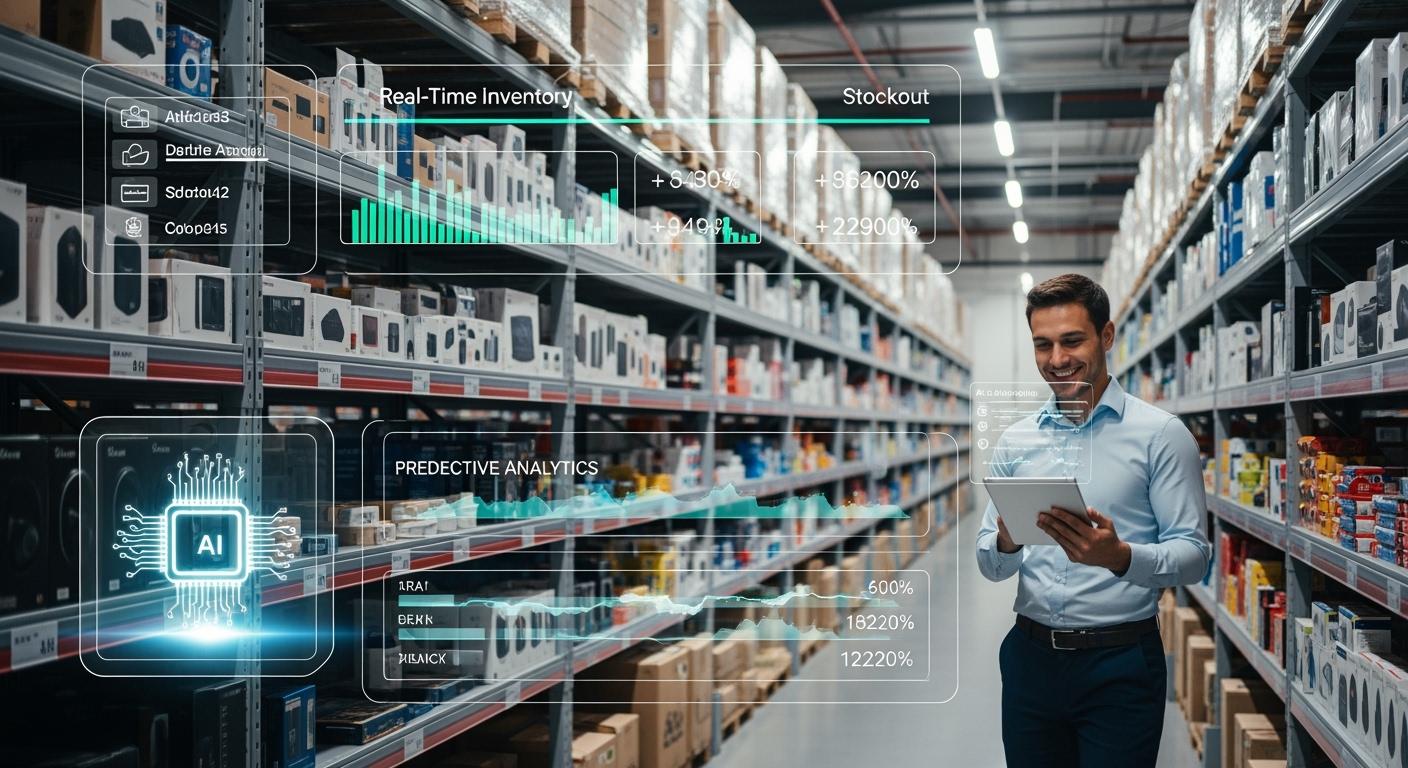
You know the frustration when products run out and customers walk away. Stockouts affect businesses everywhere.
- Companies lose up to 10% of sales from missing inventory, sometimes millions each year.
- Businesses with stockout rates above 5% can forfeit 10-15% of potential revenue.
AI inventory management changes how you handle inventory. With inventory optimization, you use data and smart tools to predict demand and automate decisions. The market for AI in inventory management grows fast as companies like Walmart and Amazon improve forecast accuracy and cut costs.
| Statistic | Impact |
|---|---|
| Predictive analytics improve forecast accuracy by up to 90% | Better decisions |
| Inventory costs drop by 10% to 30% | More savings |
AI Demand Forecasting
Historical Data Analysis
You start your journey in demand forecasting by looking at historical sales data. This data helps you see patterns and trends. AI inventory management systems use several types of sales records to build accurate forecasts.
| Type of Historical Sales Data | Description |
|---|---|
| Time-Series Data | Past sales patterns, seasonality, and trends are foundational for AI demand forecasting models. |
| External Variables | Incorporates factors like macroeconomic indicators, weather, and social trends into multivariate models. |
| Promotional Calendars | Used to account for the impact of marketing efforts on sales. |
You can use time-series data to spot repeating cycles. External variables show how outside events affect sales. Promotional calendars help you understand how marketing changes demand. AI-driven inventory systems combine all these sources to improve predictions.
Tip: When you feed more detailed data into your inventory optimization tools, you get better results.
Machine Learning Predictions
You move beyond simple averages when you use machine learning for demand forecasting. AI inventory management uses advanced algorithms to learn from your data. These models find hidden patterns and adjust to new information quickly.
- Deep learning models like Recurrent Neural Networks (RNNs) and Convolutional Neural Networks (CNNs) handle complex forecasting tasks.
- These models use many layers to process information, making them strong at finding trends in large datasets.
- Recent advances in AI let you shift from reacting to problems to predicting them. You can optimize stock levels before shortages happen.
AI-driven inventory systems detect changes in demand faster than traditional methods. Predictive analytics lets you see what customers want before they ask.
| Method | Forecast Error Reduction | Accuracy Improvement |
|---|---|---|
| Traditional Methods | Up to 50% | N/A |
| AI-Driven Approaches | 20-50% | Up to 40% |
You get more accurate forecasts with AI. These models learn from new data and adapt to market shifts. Traditional methods rely on fixed assumptions, but AI forecasting models adjust as soon as trends change.
Managing Uncertainty
You face uncertainty every day in inventory management. AI helps you manage this risk by using smart forecasting methods.
- Probabilistic forecasting gives you a range of possible outcomes, so you can plan for different scenarios.
- Dynamic safety stock updates your inventory buffer in real time as demand changes.
- Adaptive order parameters use forward-looking estimates to keep your inventory stable.
AI-driven inventory systems reduce stockouts and lower holding costs. Companies using AI for inventory optimization report up to 65% fewer stockouts. Inventory reductions of 20% to 30% are common. Walmart uses automated stock replenishment powered by AI, cutting holding costs by 10-15%. Amazon has lowered stockout rates by 25%, boosting customer satisfaction by 15%.
AI models also include external factors like seasonality and promotions. They analyze historical sales along with these signals to capture market trends and adjust forecasts. This continuous learning process helps you respond quickly to changes and avoid surprises.
Note: Predictive analytics and AI inventory management make your supply chain more responsive and efficient. You can prevent stockouts and keep customers happy.
Inventory Optimization Strategies
Implementing effective inventory optimization involves more than just forecasting demand. It requires AI to analyze multiple variables and dynamically determine the optimal stock levels. This process ensures you meet service targets while controlling costs. Let’s explore how AI-driven inventory management systems generate actionable recommendations that transform your supply chain.
Dynamic Stock Level Recommendations
AI systems calculate optimal stock levels by integrating extensive data inputs. You need both internal and external data sources for precise recommendations:
- Internal data: historical sales records, current inventory levels, promotional calendars, pricing history, and customer insights from CRM platforms.
- External data: weather forecasts, social media trends, macroeconomic indicators like inflation rates, and geopolitical factors such as shipping delays.
Synchronizing this data in real time allows AI to adjust stock recommendations promptly. Unlike static safety stock policies, which rely on fixed safety margins, AI-generated dynamic replenishment adapts instantly to market changes. For instance, during a sudden weather event or a trending social media moment, your inventory levels can be adjusted proactively, minimizing stockouts.
Compared to static policies, AI recommendations significantly reduce forecast errors and stockouts. Research shows that e-commerce businesses using AI-driven forecasting cut stockouts by up to 60%, thanks to continuous safety stock adjustments based on incoming data. This real-time replenishment capability means your stock levels align more accurately with actual demand, improving service levels.
Reorder Point Automation
AI automates the setting of reorder points by continuously analyzing your inventory and various market signals. Instead of relying on manual calculations, an automated stock replenishment process considers several key parameters:
- Seasonal fluctuations
- Lead times
- Supplier performance
- Inventory levels
- Sales trends
These parameters are dynamically integrated into the system. For example, if supplier reliability drops or lead times extend, AI automatically adjusts reorder points to compensate. This ensures you never order too late or too early, maintaining a balance between holding costs and service targets.
AI-driven inventory management automates safety stock calculations by analyzing factors like demand variability and supplier performance. The system can perform safety stock adjustments in real time, ensuring safety stock remains optimal without unnecessary excess. This automation reduces the risk of stockouts or overstocking, especially during high-demand periods or supply chain disruptions.
Furthermore, automated safety stock decisions enable really effective supply chain optimization. They empower your supply chain to respond swiftly to choke points, reducing lead time variability and fostering stronger supplier relationships. As a result, your operations become more agile, and your inventory management turns into a proactive rather than reactive process.
Service Level and Cost Balancing
Balancing high service levels with reasonable inventory costs is a complex challenge. AI approaches this by analyzing various trade-offs and generating recommendations tailored to your business goals. Here are some ways AI achieves this balance:
- Predictive demand forecasting reduces overstocking and understocking by accurately estimating customer needs.
- Real-time inventory monitoring provides continuous data to inform stock decisions, avoiding unnecessary safety stock accumulation.
- Automated stock replenishment ensures purchase orders trigger at the right times, aligning inventory levels with service-level targets.
- Scenario planning allows you to evaluate different risk levels and determine the most cost-effective inventory strategy.
AI balances inventory management costs with desired service levels by considering key parameters such as lead times, demand variability, and supplier reliability. When these elements are optimized, your business can deliver a high-quality customer experience without overburdening your working capital.
By implementing automated replenishment systems, you benefit from just-in-time inventory flows, reducing excess inventory and storage costs. This approach fosters a more sustainable supply chain, ultimately boosting your return on investment.
Efficiency in inventory management becomes measurable through metrics like task automation rate, time to insight, and error reduction. Comparing these metrics over time helps verify that AI-driven strategies effectively improve operational performance.
AI in Practice
Retail and eCommerce Examples
You see many large retailers use AI to improve their inventory. These companies use smart systems to predict what customers want and when they want it. Here is how some well-known brands use AI:
| Company | AI Application | Results |
|---|---|---|
| Walmart | Advanced AI systems for demand forecasting and inventory management | Stockout rate drop from 5.5% to about 3%, surplus stock cut by 15% |
| Amazon | Predictive inventory system utilizing deep learning algorithms | 25% reduction in stockout rates, 20% increase in inventory turnover, 10% reduction in carrying costs |
| Levi's | AI-powered demand forecasting | 15% reduction in stockouts, 10% increase in inventory turnover |
You can see that these companies have fewer stockouts and better inventory turnover. For example, Amazon’s system helps reduce out-of-stock items by 35%. Walmart also saves money by cutting inventory costs by up to 30%. These results show that AI makes a big difference in retail.
Manufacturing Use Cases
You can use AI in manufacturing to keep your production running smoothly. AI helps you know when to order raw materials and how much to keep on hand. Here are some ways AI helps manufacturers:
- Improves demand forecasting so you always have the right materials.
- Supports just-in-time inventory to lower storage costs.
- Predicts equipment problems to avoid downtime.
- Tracks inventory in real time to prevent shortages.
- Reduces waste and helps your business become more sustainable.
AI also connects with manufacturing execution systems. This connection lets you adjust production schedules quickly if something changes. You get better resource use and faster responses to problems.
Small Business Adoption
You might think AI is only for big companies, but small businesses can use it too. Some people worry that AI is too complex or that it needs perfect data. Others fear that AI will replace human workers. In reality, many tools are easy to use and help you make better decisions.
| Software | Key Features | Target Audience |
|---|---|---|
| Zoho Inventory | Free plan, integration capabilities, sales and stock tracking | Small businesses |
| Katana | Real-time inventory tracking, Materials Resource Planning | Manufacturing-focused businesses |
| Lightspeed | Stock tracking, purchase order creation, bulk price changes | High-volume retailers |
You can start with simple solutions and grow as your business grows. AI inventory management helps you save time, avoid stockouts, and keep your customers happy.
Benefits of Inventory Optimization

Preventing Stockouts
You want to keep your shelves full and your customers happy. AI-driven inventory systems help you do this by using real-time data and predictive analytics. These tools watch sales trends and outside factors, so you can adjust your orders before you run out. You avoid lost sales and keep your business running smoothly.
- Organizations using AI-driven inventory report a 35% drop in out-of-stock events.
- Walmart has seen stockouts fall by up to 25%.
- Amazon has cut stockouts by 35%.
Empirical studies show that inventory optimization with AI improves product availability and service levels. You can meet customer needs more often and build trust with your shoppers.
Reducing Excess Inventory
Too much stock ties up your money and takes up space. Inventory optimization helps you order just what you need. AI-driven inventory management systems track demand and supplier performance. They help you avoid over-ordering and reduce waste.
| Metric | Reduction Percentage |
|---|---|
| Inventory Carrying Cost | 20-35% |
| Inventory Holding Cost | Up to 25% |
| Stockout Reduction | 30-40% |
| Return on Investment (ROI) | 200-400% |
| Operational Cost Reduction | 25-50% |
AI inventory optimization also frees up working capital. Global retailers have optimized $89 million in working capital by improving inventory turnover. You can use this extra cash to grow your business or improve operations.
Excess inventory ties up valuable capital that could otherwise be used for growth initiatives or operational improvements. AI-driven replenishment planning ensures inventory is procured only when needed and at optimal levels, freeing up cash that would have been stuck in stagnant or slow-moving stock.
Improving Efficiency
You want your supply chain to work faster and smarter. AI-driven inventory systems automate stock replenishment and give you real-time visibility. You can make quick decisions and respond to changes right away. This boosts supply chain efficiency and helps you stay ahead of problems.
| Improvement Type | Reported Benefit |
|---|---|
| Inventory Cost Reduction | Up to 30% reduction |
| Improved Inventory Turnover Rate | Increased from 3.9x to 5.2x annually |
| Reduction in Emergency Orders | 40% reduction |
| Reduction in Food Waste | 30% reduction |
| ROI from AI Implementation | Up to 927% |
AI-driven inventory optimization makes your supply chain more responsive. You can predict demand, spot disruptions, and keep your business running smoothly. This leads to better supply chain efficiency and happier customers.
Implementing Inventory Optimization
Data Readiness
You need to prepare your data before you start using AI for inventory optimization. Begin by cleaning your data. Remove duplicates, fix missing values, and transform data types. Connect your ERP and WMS systems to create seamless data pipelines. Standardize your data so it stays consistent across all platforms. Check for accuracy and completeness. Design your pipelines to handle large volumes and protect sensitive information. Companies that invest in data preparation and integration often see inventory costs drop by up to 25%. You should also verify the quality of your historical transactional data. Look for gaps or inconsistencies and use data cleansing tools to fix them. High-quality data helps AI make better decisions.
- Data cleaning
- Data pipeline setup
- Data standardization
- Data quality checks
- Scalability and security
Tip: Proper data preparation leads to fewer stockouts and more accurate inventory tracking.
Tool Selection
You must choose the right AI inventory optimization tool for your business. Consider how well the tool fits your needs, its technical capabilities, and how easily it integrates with your current systems. Usability, implementation speed, total cost, and vendor reliability matter too.
| Criteria | Considerations |
|---|---|
| Business Fit | Matches your inventory needs |
| Technical Capability | Handles complex forecasting |
| Integration | Connects with ERP/WMS |
| Usability | Easy for your team to use |
| Implementation | Quick to deploy |
| Total Cost | Fits your budget |
| Vendor Viability | Reliable support |
Team Training
You need to train your team to use AI inventory tools. Start with basic tutorials. Show how to interpret real-time data analytics and use dashboards. Encourage hands-on practice. Provide ongoing support and refresher sessions. Well-trained staff help you get the most from your AI system.
- Tutorials and guides
- Dashboard walkthroughs
- Practice sessions
- Ongoing support
Performance Monitoring
You must track how well your AI inventory system works. Use real-time dashboards to monitor key performance indicators. Retrain your AI models regularly with new data. Schedule automated audits to check for bias, compliance, and accuracy.
| Technique | Description | Example Use Case |
|---|---|---|
| Real-Time Dashboards | Track KPIs and detect anomalies | Monitor inventory levels |
| Regular Model Retraining | Update models with new data | Improve forecast accuracy |
| Automated Model Audits | Assess bias and accuracy | Ensure fair inventory decisions |
Note: Continuous monitoring helps you improve your inventory system and keeps your supply chain efficient.
You see how AI changes inventory management. You prevent stockouts and improve supply chain efficiency. Inventory optimization helps you keep products available and reduce waste. You make smarter decisions with real-time data.
- You respond faster to market changes.
- You save money and boost customer satisfaction.
Consider ai-driven solutions to move from guessing to knowing. You build a stronger business with data-informed choices.
FAQ
What is AI inventory optimization?
AI inventory optimization uses smart computer programs to help you decide how much stock to keep. These programs look at sales data and trends. You get better predictions and fewer stockouts.
How does AI help prevent stockouts?
AI watches your sales and inventory in real time. It predicts when you might run out of products. You get alerts to order more before you face empty shelves.
Is AI inventory management only for big companies?
No, you can use AI tools even if you run a small business. Many software options work for different company sizes. You can start small and grow as your needs change.
What data do I need for AI inventory systems?
You need sales records, current inventory numbers, and supplier details. Clean and accurate data helps AI make better decisions. You can connect your systems to collect this information automatically.
See Also
AI-Driven Safety Stock Solutions for Fashion Retail in 2025
Utilizing Predictive Analytics for Retail Restocking Strategies 2025
Enhancing Efficiency Through Intelligent Ecommerce Warehouse Tactics
Accelerating Market Entry: AI's Role in Shortening Lead Times
Utilizing AI to Improve Production Forecasting Accuracy in 2024